
This article is dedicated to the detection and calculation of unavoidable gas losses due to the measuring devices and technological processes of auto-gasification pressure stations (CNGs), which are conditioned by the productivity of CNGs. The productivity of CNG stations operating in the territory of RA differs according to their daily charging capabilities, i.e. according to the number of existing gas pressure stations. The need of analysis and development of such methodology stems from new approaches in flow measurements, which are of high importance in ensuring uniformity of measurements in gas transportation and distribution systems. The accurate determination of CH4 emissions is of high necessity in the scope of environmental management systems, which already function according to the international requirements prescribed by ISO 14001 as well. In the territory of the Republic of Armenia the development of such a methodology result from the implementation of Article 150 of the Government Decision No. 1101-N of August 28, 2008 "On approving the technical regulation of the minimum requirements for the construction and operation of gas filling stations" of the Republic of Armenia.
| Published in | American Journal of Mechanical and Industrial Engineering (Volume 10, Issue 2) |
| DOI | 10.11648/j.ajmie.20251002.12 |
| Page(s) | 46-51 |
| Creative Commons |
This is an Open Access article, distributed under the terms of the Creative Commons Attribution 4.0 International License (http://creativecommons.org/licenses/by/4.0/), which permits unrestricted use, distribution and reproduction in any medium or format, provided the original work is properly cited. |
| Copyright |
Copyright © The Author(s), 2025. Published by Science Publishing Group |
Auto-gasification Pressure Station (CNGs), Gas Loss, Error of a Gas Measuring Device, Source of Uncertainty, Standard Conditions, Working Conditions
 ),
),  ),
),  ).
). 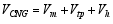 (1)
(1)  (2)
(2)  - the error of entrance measuring device, %,
  - the error of a gas station dispenser, %։
  (3)
(3)  - the error of
  measuring instrument, %,
  - the number of the measuring instrument.
  (4)
(4)  - the geometric volume of technological equipment to be emptied before repair or testing, m3,
  ,
,  - the pressure and temperature under standard conditions, MPa, °C,
  ,
,  - the operating pressure and temperature before emptying, MPa, °C,
  - the gas compressibility coefficient under operating conditions.
  (5)
(5)  - the number of oil-water separators, pcs,
  - the geometrical volume of a technological equipment to be blowdowned, m3,
  ,
,  - the pressure and temperature under standard conditions, MPa, °C,
  ,
,  - the operating pressure and temperature, MPa, °C,
  - the gas compressibility coefficient under operating conditions.
  (6)
(6)  - the permissible amount of gas losses from one gas well in 1 day, which according to
  - the coefficient that take into account the deviation of the actual average gas pressure in the pipeline from the gas pressure during the test,
  - the coefficient taking into account the actual conditions of operation,
  - the calculation period, day.
  - number of accumulators, pcs,
  (7)
(7)  - the inner diameter of the i-th gas pipeline segment, m,
  - the length of the i-th gas pipeline segment, m,
  - the amount of permissible gas losses during the tightness test of the gas pipeline, from 1m2 of surface per day, m3,
  - coefficients that take into account the deviation of the actual average gas pressure, average temperature, and average internal diameter of the gas pipeline respectively, from the gas pressure, temperature, and internal diameter of the gas pipeline during the test,
  - the calculation period, day,
  - the number of gas pipelines, pcs.
  (8)
(8)  - the surface of i-th shut-off valve, m2,
  - the amount of permissible gas losses during the hermeticity test of the gas pipeline, from 1m2 of surface per day,
  m3/m2 ∙day,
  - the coefficients that take into account the deviation of the actual average gas pressure and average temperature, respectively, from the gas pressure and temperature during the test.
 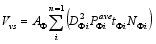 (9)
(9)  - the constant coefficient, which takes into account the critical mode of gas leakage and is equal to 2.37 m/MPa s,
  - the inner diameter of the vent stack (pipe), m,
  - the average gas pressure before the flow cut, MPa,
  - the duration of the emission, s,
  - the number of emissions in the calculation period, times,
  - the number of vent stacks in the calculation period, pcs.
 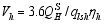 (10)
(10)  - the seasonal heat demand of the heating system, kWh,
  - the lower specific heat of gas, kJ/m3,
  - the average useful efficiency coefficient of heating boilers.
 The volume (529240 m3) of entered gas in calculation period (31 days) | |||
|---|---|---|---|
The source of gas loss | Symbol | Estimated value (m3) | Estimated value in comparison with incoming gas (%) |
Error of measuring device |
| 0.000 | 3.736 |
Accumulator testing |
| 0.000 | 0.000 |
Tightness of accumulator |
| 344.557 | 0.065 |
Blowdowns |
| 13.032 | 0.002 |
Tightness of shut-off valves |
| 0.133 | 0.000025 |
Tightness in gas pipelines |
| 64.200 | 0.012131 |
Heating |
| 63.414 | 0.011982 |
Total | 485.337 | 0.092 | |
CJSC | Closed Joint Stock Company |
NUACA | National University of Architecture and Construction of Armenia |
HGSV | Heat and Gas Supply and Ventilation |
CNGs | Compressed Natural Gas Station |
CNG | Compressed Natural Gas |
RA | Republic of Armenia |
| [1] |
RA Government Decision No. 1101-N of 28.08.2008, On approving the technical regulation of the minimum requirements for the construction and operation of gas filling stations.–
https://www.arlis.am/DocumentView.aspx?DocID=65113 (in Armenian). |
| [2] |
RA Minister of Economy No 289-N of 10.05.2011 and RA State Revenue Committee No 772-N of 19.05.2011 joint order, the order of lead-sealing of automobile gas filling stations (CNG stations)–
https://www.arlis.am/DocumentView.aspx?docID=69282 (in Armenian). |
| [3] | RA Energy Commission Decision No 41 of 14.06.2002 Methodology: methodology for calculating unavoidable technological losses of natural gas in the gas transportation system. (in Armenian). |
| [4] | RA Energy Commission Decision No 41 of 14.06.2002 Methodology: methodology for calculating natural gas consumed for own needs in the gas transportation system. (in Armenian). |
| [5] |
STO Gazprom 2-1.22-175-2007, Regulatory documents for the design, construction and operation of OAO Gazprom facilities, norms for operating costs for the production of compressed natural gas.
https://www.ngvforum.ru/attachments/42/ (in Russian). |
| [6] | Giampaolo Ton. Compressor Handbooks. Principles and Practice. Taylor & Francis Ltd. (2010) 376. |
| [7] | GA Report АС-55/GS, Methodology of normalization of gas losses in the gas sector of Armenia, (Institute of Architecture and Construction, Yerevan, 1996) (in Armenian). |
| [8] |
Decree of the Government of the Kyrgyz Republic N358 dated July 31, 2018 Methodology for calculating the standard losses of natural gas at gas facilities of the Kyrgyz Republic.
https://cbd.minjust.gov.kg/34-2/edition/891274/ru (in Russian). |
| [9] | Determination of technological losses of natural gas from surface technological and wellhead equipment during UGS operation. Research report, M. 2001, Podzemgazprom. (in Russian). |
| [10] |
Amural I. B., Slonko A. N., Marchenko S. G., Lyashenko A. M. Measuring system for gas metering based on ultrasonic meter Turbo Flow UFG manufactured by OOO NPO Turbulence-DON (Sphere, Oil and Gas, 1/2018) (63), 96-99.
https://www.turbo-don.ru/izm-system/ (in Russian). |
| [11] |
Ministry of Economy of the Republic of Armenia National Body for Standards and Metrology.
www.armstandard.am . (in Armenian). |
APA Style
Sahakyan, A., Egnatosyan, S. (2025). Analyses of Technological Processes of Automobile Compressed Natural Gas Stations and Development of Methods for Loss Reduction. American Journal of Mechanical and Industrial Engineering, 10(2), 46-51. https://doi.org/10.11648/j.ajmie.20251002.12
ACS Style
Sahakyan, A.; Egnatosyan, S. Analyses of Technological Processes of Automobile Compressed Natural Gas Stations and Development of Methods for Loss Reduction. Am. J. Mech. Ind. Eng. 2025, 10(2), 46-51. doi: 10.11648/j.ajmie.20251002.12
AMA Style
Sahakyan A, Egnatosyan S. Analyses of Technological Processes of Automobile Compressed Natural Gas Stations and Development of Methods for Loss Reduction. Am J Mech Ind Eng. 2025;10(2):46-51. doi: 10.11648/j.ajmie.20251002.12
@article{10.11648/j.ajmie.20251002.12,
  author = {Anna Sahakyan and Siranush Egnatosyan},
  title = {Analyses of Technological Processes of Automobile Compressed Natural Gas Stations and Development of Methods for Loss Reduction
},
  journal = {American Journal of Mechanical and Industrial Engineering},
  volume = {10},
  number = {2},
  pages = {46-51},
  doi = {10.11648/j.ajmie.20251002.12},
  url = {https://doi.org/10.11648/j.ajmie.20251002.12},
  eprint = {https://article.sciencepublishinggroup.com/pdf/10.11648.j.ajmie.20251002.12},
  abstract = {This article is dedicated to the detection and calculation of unavoidable gas losses due to the measuring devices and technological processes of auto-gasification pressure stations (CNGs), which are conditioned by the productivity of CNGs. The productivity of CNG stations operating in the territory of RA differs according to their daily charging capabilities, i.e. according to the number of existing gas pressure stations. The need of analysis and development of such methodology stems from new approaches in flow measurements, which are of high importance in ensuring uniformity of measurements in gas transportation and distribution systems. The accurate determination of CH4 emissions is of high necessity in the scope of environmental management systems, which already function according to the international requirements prescribed by ISO 14001 as well. In the territory of the Republic of Armenia the development of such a methodology result from the implementation of Article 150 of the Government Decision No. 1101-N of August 28, 2008 "On approving the technical regulation of the minimum requirements for the construction and operation of gas filling stations" of the Republic of Armenia.
},
 year = {2025}
}
TY  - JOUR
T1  - Analyses of Technological Processes of Automobile Compressed Natural Gas Stations and Development of Methods for Loss Reduction

AU  - Anna Sahakyan
AU  - Siranush Egnatosyan
Y1  - 2025/04/28
PY  - 2025
N1  - https://doi.org/10.11648/j.ajmie.20251002.12
DO  - 10.11648/j.ajmie.20251002.12
T2  - American Journal of Mechanical and Industrial Engineering
JF  - American Journal of Mechanical and Industrial Engineering
JO  - American Journal of Mechanical and Industrial Engineering
SP  - 46
EP  - 51
PB  - Science Publishing Group
SN  - 2575-6060
UR  - https://doi.org/10.11648/j.ajmie.20251002.12
AB  - This article is dedicated to the detection and calculation of unavoidable gas losses due to the measuring devices and technological processes of auto-gasification pressure stations (CNGs), which are conditioned by the productivity of CNGs. The productivity of CNG stations operating in the territory of RA differs according to their daily charging capabilities, i.e. according to the number of existing gas pressure stations. The need of analysis and development of such methodology stems from new approaches in flow measurements, which are of high importance in ensuring uniformity of measurements in gas transportation and distribution systems. The accurate determination of CH4 emissions is of high necessity in the scope of environmental management systems, which already function according to the international requirements prescribed by ISO 14001 as well. In the territory of the Republic of Armenia the development of such a methodology result from the implementation of Article 150 of the Government Decision No. 1101-N of August 28, 2008 "On approving the technical regulation of the minimum requirements for the construction and operation of gas filling stations" of the Republic of Armenia.

VL  - 10
IS  - 2
ER  -
Flow Measurements Division, National Institute of Measurements Closed Joint-Stock Company, Yerevan, Armenia
Biography: Anna Sahakyan: Development of quality and metrology systems in gas transportation and distribution systems, development and production of new or modified flow metering systems, production of natural gas detection devices, production of natural gas analyz-ers, investigation of calculation in natural gas losses in state-to-the-art technological processes and accidents.
Research Fields: Metrology, heat and gas supply, energy efficiency, energy saving, system management.

Heat and Gas Supply and Ventilation Chair, National University of Architecture and Construction of Armenia, Yerevan, Armenia
Biography: iranush Egnatosyan – Associate Professor of HGSV Chair. In 2011 participated in and completed advanced training courses “Energy Audit and Audit Equipment”, “ESCO Establishment and Basic Business”, organized by USAID. In 2022 took second place in the innovation technology competition and received the “Look into the Future” medal. Currently is a researcher in the pro-gram “Maintenance and development of the Construction and Ur-ban Economics Research Laboratory”. The main research fields are energy efficiency of building using heat pumps systems and renewable energy sources.
Research Fields: Thermal-energy, heat and gas supply, heating, ventilation, energy efficiency, energy saving, heat pump.





 Share This Article
 Twitter
 Linked In
 Facebook


 Copy
Copy Download